What looks like a quiet patch of scrubland at Silicon Ridge may in fact hold one of the most lucrative deposits of high-tech metals ever identified in North America, with early estimates pointing to a potential value of around €120 billion.
Utah’s silent hills hiding a high‑tech jackpot
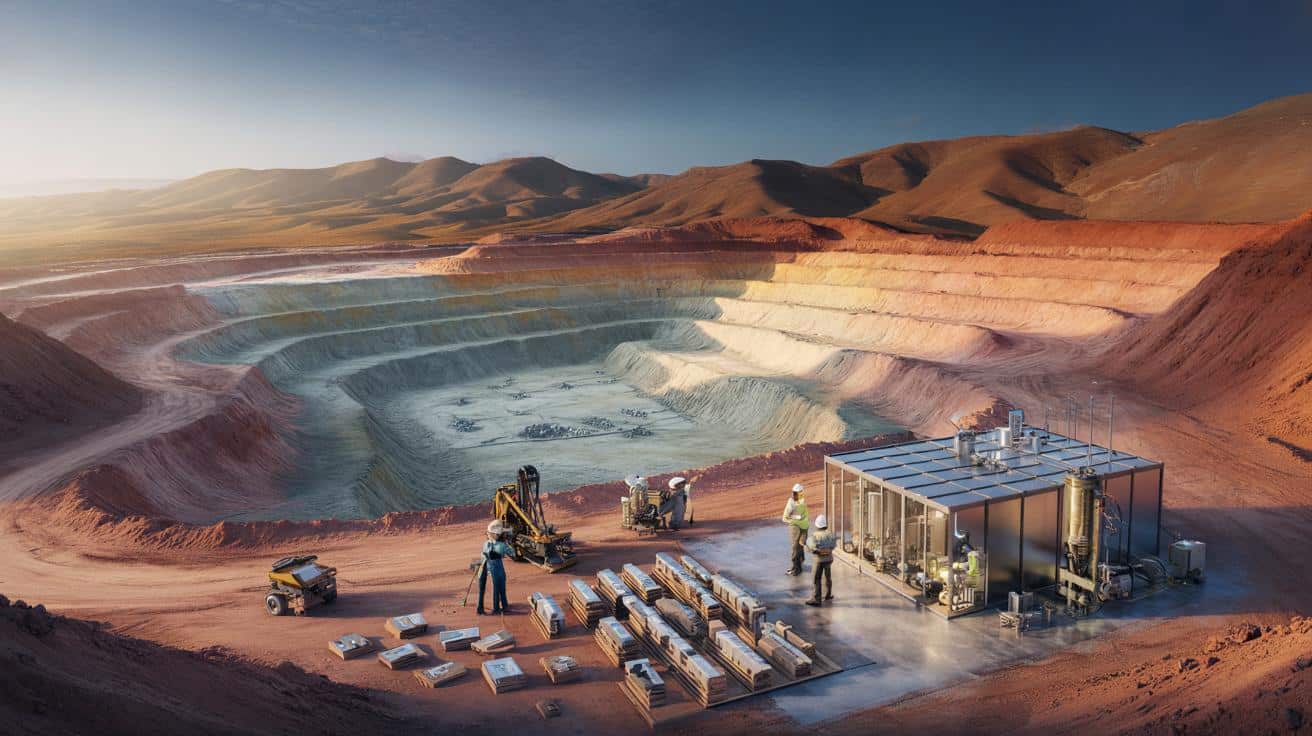
The site lies in the state of Utah, on a zone now branded “Silicon Ridge”, in a deliberate nod to Silicon Valley. The area has long been known to geologists, but only recent surveys have revealed the true scale of what sits beneath the surface.
Instead of hard rock seams that require heavy blasting and deep tunnelling, the deposit is hosted in ion‑rich clays. Over thousands of years, these clays behaved like geological sponges, trapping and concentrating valuable metals carried by water and weathering.
Geologists have identified 16 strategic metals concentrated in soft clay at Silicon Ridge, an unusual combination outside China’s dominant rare earth basins.
That “sponge” effect matters. Clay‑hosted deposits are typically easier and cheaper to mine than hard rock, and can often be processed with less energy and fewer chemicals. For a government trying to build a secure supply of minerals without sparking a new environmental backlash, that combination looks highly attractive.
A rare cocktail of 16 critical metals
The company behind the project, Ionic Mineral Technologies (Ionic MT), has drilled 106 boreholes, logged more than 10,000 metres of core and opened 35 trenches across roughly 260 hectares of land. Even at this early stage, the picture looks striking.
Average concentrations in the clay reach about 2,700 parts per million (ppm) of critical metals — around 0.27% by mass. For clay‑hosted rare earths, that is a strong figure. Many Chinese deposits that currently feed the global market sit between 500 and 2,000 ppm.
What’s actually in the ground?
The Silicon Ridge clays are not just rich, they are diversified. According to early assessments, they contain at least 16 strategically important elements, including:
- Lithium — key for electric vehicle and grid batteries
- Gallium — used in advanced semiconductors, 5G and defence electronics
- Germanium — crucial for fibre‑optic networks, night‑vision systems and solar cells
- Tungsten — essential in cutting tools, drilling equipment and some armour‑piercing rounds
- Vanadium — used in steel alloys and emerging flow batteries
- Light and heavy rare earths — elements like neodymium, dysprosium and terbium for powerful magnets and high‑end electronics
This mix is particularly suited to US industry. It straddles clean energy (batteries, wind turbines), digital infrastructure (chips, data centres, telecoms) and defence (radars, guidance systems, advanced alloys).
➡️ “One in 200 million”: fisherman hauls in electric-blue lobster with extraordinary colour
➡️ Why a splash of vinegar in the cooking water keeps sausages from bursting
➡️ Psychology says preferring solitude over constant social life is a subtle sign of these 8 traits
➡️ How preparing once prevents repeated stress
A single site serving batteries, AI chips, satellites and military hardware gives Silicon Ridge outsize strategic weight compared with its modest surface area.
From clay to metal: a gentler extraction method
Mining rare earths usually conjures images of open pits, acid baths and giant furnaces. In China and elsewhere, processing can involve aggressive chemicals and energy‑intensive roasting of ore, generating substantial waste.
Low‑temperature ion exchange instead of acid baths
Ionic MT claims it can avoid many of those steps at Silicon Ridge. The company plans to use a low‑temperature ion‑exchange process to pull metals from the clay. In simple terms, a solution is passed through the clay, swapping harmless ions for the valuable metal ions bound to the mineral surfaces.
The firm is targeting recovery rates of up to 95% for key metals, without high‑temperature kilns or large volumes of strong acids. If those numbers hold at commercial scale, the environmental footprint per kilo of metal could drop sharply compared with standard routes.
Permits have already been granted for both the mine site and a processing plant, according to the company. The branding “Silicon Ridge” reflects the ambition: a mineral hub feeding the same sectors that made Silicon Valley rich, but grounded in geology and heavy engineering rather than software.
Challenging China’s grip on rare earths
Behind the geology sits a raw geopolitical story. China currently controls more than 80% of the global rare earths market and dominates refining capacity even further. It has repeatedly used export controls on gallium, germanium and various rare earths as a pressure tool.
For Washington, that dependence looks risky as electric vehicles roll off production lines, AI data centres surge, and defence contractors demand ever more specialised materials. Silicon Ridge emerges at a time when the US government is throwing money, tax breaks and regulatory support at “friend‑shoring” critical minerals.
Utah’s Senate president has already called the project a historic step for US industrial sovereignty, underscoring the political stakes around a patch of remote desert.
The Pentagon and several federal agencies are actively backing efforts to build domestic supply chains. While no detailed funding package for Silicon Ridge has been made public, the project aligns almost perfectly with current US industrial policy priorities.
Crunching the numbers: how you reach €120 billion
The €120 billion figure comes from a rough yet instructive calculation based on early resource estimates.
From ppm to billions of euros
So far, about 12 million tonnes of clay appear sufficiently characterised. At 2,700 ppm of critical metals — 0.27% by mass — that translates to around 32,400 tonnes of potentially recoverable metals.
Using recent price ranges for heavy rare earths, gallium, germanium and lithium, analysts have suggested an average basket value of roughly €1,400 per kilogram of mixed product. At that rate, the already‑studied portion could be worth between €45 and €65 billion in gross, in‑situ value.
Crucially, those 12 million tonnes represent only around 11% of the current project area. If similar grades extend across the whole zone — a big “if” that only further drilling can resolve — then total in‑ground value could push beyond €120 billion.
| Item | Approximate figure | What it means |
| Explored clay tonnage | 12 million tonnes | Volume already characterised by drilling and tests |
| Average metal grade | 2,700 ppm (0.27%) | Metal content per tonne of clay |
| Recoverable metals | ≈ 32,400 tonnes | Potential output from current explored zone |
| Estimated basket price | ≈ €1,400 / kg | Average value of contained metals |
| Gross value (confirmed zone) | €45–65 billion | Before costs, taxes and refining |
| Potential full‑area value | > €120 billion | If similar grades extend across the remaining 89% |
None of these numbers account for the high cost of extraction, processing, infrastructure, royalties or environmental management. Yet they highlight why major banks are already circling the project. Ionic MT has reportedly partnered with a large investment bank, signalling a likely fundraising push as feasibility studies advance, with a first economic assessment targeted for the first half of 2026.
What this could mean for prices and supply chains
A new anchor for rare earth pricing?
Current market prices for rare earths and related metals vary widely. Recent data show:
- Neodymium metal around €140–150 per kilo
- Dysprosium oxides near €420–450 per kilo
- Terbium oxides in the €780–980 per kilo range
- Yttrium oxides roughly €25–30 per kilo
- High‑purity scandium above €3,200 per kilo
A large, reliable US source of these materials would not crash prices overnight, but it could temper spikes when Beijing tightens exports. It would also give Western buyers more leverage in contract negotiations, reducing the risk of supply cuts derailing clean‑tech or defence programmes.
Risks, timelines and the real‑world impact
Despite the excitement, several hurdles remain between Silicon Ridge and commercial output. Environmental groups will scrutinise any water use, waste handling and dust emissions, even with a milder processing method. Local communities will want guarantees on jobs, truck traffic and land restoration once mining ends.
Then there is the engineering risk. Lab‑scale recovery rates of 95% often slide when scaled up to industrial plants. Clay behaviour can change with depth or moisture content, and building a full value chain — from mine to refined oxide or metal — is vastly more complex than shipping raw concentrates abroad.
For US manufacturers, though, even partial success could matter. A mine that covers just a portion of domestic demand for magnets, batteries or specialist alloys can shave years off project lead times and reduce exposure to geopolitical shocks. Automotive groups betting on millions of electric cars, and tech firms racing to build AI data centres, are already running scenarios where Silicon Ridge becomes part of their long‑term supply map.
For readers trying to make sense of the jargon, “rare earths” are not truly rare in the Earth’s crust. They are relatively abundant but usually spread out in low concentrations and tricky to separate. Heavy rare earths such as dysprosium and terbium are particularly hard to source, which explains their high price tags.
If Silicon Ridge lives up to its early promise, it will not just generate headlines about billions of euros underground. It will test whether the United States can rebuild a critical‑minerals industry that balances competitiveness, environmental pressure and geopolitical tension — all starting from a bed of clay in the Utah desert.