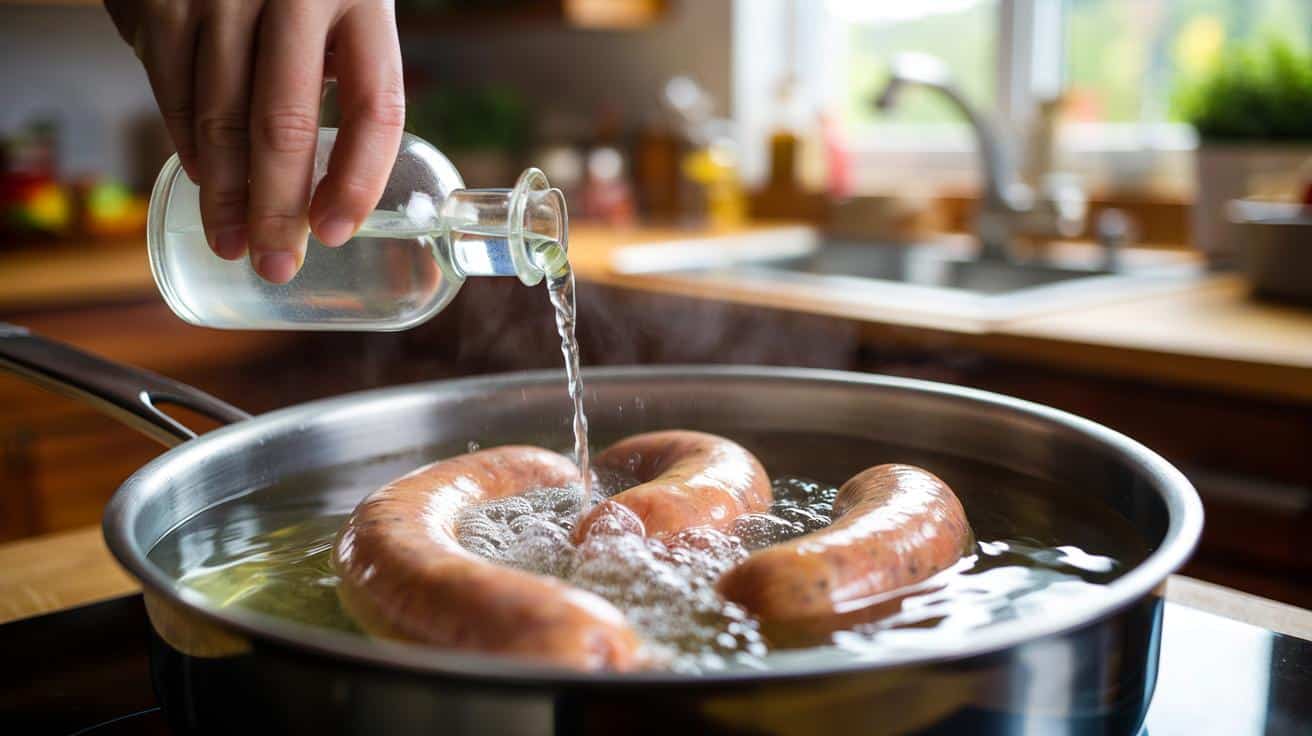
Home cooks know the scene well: foaming water, split casings, fat everywhere and that heavy sausage smell clinging to the kitchen. A simple, very old-fashioned trick – adding a little vinegar to the water – quietly fixes most of this, and the science behind it is more interesting than it looks.
Why sausages burst so easily in hot water
The problem usually isn’t the sausage, but the way it’s heated. Inside every sausage sits a mixture of meat, fat and liquid. As the temperature rises, everything inside expands. If the outside can’t stretch fast enough, it tears.
When water boils furiously, the interior of the sausage heats up rapidly. The fat softens, juices turn to steam and pressure builds. The casing – often made from natural intestine or collagen – becomes tight and stressed by the high temperature. One weak spot is enough for it to rupture.
Gentler heat changes the story. Keeping the water just below a rolling boil allows the inside of the sausage to warm more evenly. The casing softens and stretches gradually instead of being shocked by sudden heat.
- Vigorous boiling drives fast expansion and high internal pressure.
- Gentle simmering gives steady heating and keeps the casing intact.
- For pre-cooked sausages, you only need them hot, not violently bubbling.
- Good temperature control keeps stress on the casing low and juices inside.
Sausages burst when internal pressure rises faster than the casing can stretch. Heat control matters more than brand or recipe.
What vinegar actually does in the pan
Most household vinegar – whether white wine or plain distilled – is about 5% acetic acid. That sounds technical, but in practice it simply means that even a spoonful in a pan of water changes the chemistry around the sausage.
The first effect is on proteins. Sausage casings, especially those made with collagen, react to acidity. A slightly lower pH alters how these proteins behave and how tightly they hold together. When the environment is a touch more acidic, the surface can become more stable and less likely to tear under stress.
There is also a benefit for your kitchen air. Strong cooking smells often come from basic compounds known as amines. In an acidic environment, they bind with the acid and form less volatile salts. That means fewer aggressive, lingering odours in your home.
Four ways vinegar changes your sausage game
- Reduces bursting by subtly strengthening and tightening the casing surface.
- Improves texture, helping sausages feel more uniform instead of rubbery.
- Balances flavour, as a mild acidity cuts through salt and fat.
- Softens cooking smells, leaving a less heavy meaty aroma in the kitchen.
A teaspoon or two of acid doesn’t just season the water; it reshapes the way proteins in the casing behave under heat.
➡️ How preparing once prevents repeated stress
➡️ “One in 200 million”: fisherman hauls in electric-blue lobster with extraordinary colour
➡️ A mine with a potential value of €120 billion found in the United States
➡️ Psychology says preferring solitude over constant social life is a subtle sign of these 8 traits
How to use the vinegar trick properly
The sequence in the pan matters. Water comes first, then heat, then sausages. The vinegar goes in with the cold water so the environment is right from the moment the sausages start heating.
Cooks who use this method regularly tend to follow one simple rule of thumb: about one tablespoon of vinegar per litre of water. At that level, the water becomes noticeably more acidic, but the sausages will not taste sour.
| Step | Action |
|---|---|
| 1 | Fill a pan with cold water and add 1 tbsp vinegar per litre. |
| 2 | Heat until the water is hot and steaming, but not at a roaring boil. |
| 3 | Gently place the sausages in the water. |
| 4 | Maintain a low simmer for 5–8 minutes, without strong bubbling. |
This approach works for hot dog sausages, fresh pork links, German-style bratwurst and poultry sausages. The result is usually the same: smoother skins, fewer splits, and less drama when you lift the lid.
The right temperature and timing for safer, juicier sausages
Many supermarket sausages are already pre-cooked or partially cooked. They do not need aggressive boiling. They simply need to reach a safe serving temperature, typically around 74°C (165°F) in the centre.
If you have a kitchen thermometer, you can check the thickest sausage. If you don’t, rely on visual clues: the sausage should be hot throughout, firm but not hard, and releasing a slight sheen of fat without heavy bubbling in the water.
Long, violent cooking does more damage than good. It weakens the casing, drives out moisture and leaves you with dry meat and a greasy pan. Gentle heat with a hint of acid does the opposite: it keeps structure intact and flavours inside.
Calm heat, a touch of acidity and a bit of patience give you plump sausages with soft casings and much less mess.
What “collagen casing” and “natural casing” really mean
Many packs mention the casing type, but the label rarely explains why it matters on the hob.
- Natural casing usually comes from animal intestine. It has a slightly irregular thickness and a characteristic snap when you bite it.
- Collagen casing is manufactured from processed animal protein. It is more uniform and often used for mass-market sausages.
Collagen tends to lose strength quickly as temperatures approach the high 90s Celsius. That’s one reason cheap sausages split more easily when boiled hard. A cooler, slightly acidic bath helps it hold together better and gives you more control over the final texture.
Practical scenarios: from pan to grill without blowouts
One useful approach is to treat the vinegar simmer as a gentle pre-cook. Poach the sausages until they are hot through and the casings have relaxed. Then finish them in a pan, on a grill pan, or on the barbecue just long enough to brown the outside.
Because the internal temperature is already safe, you can focus on colour and flavour. You need less time over fierce heat, which means even less risk of splitting and less fat dripping and burning.
This two-stage method works especially well for parties or match days. You can pre-simmer a big batch, keep them warm, and then brown only what you need as guests arrive, reducing both stress and waste.
Risks, limits and when vinegar is a bad idea
There is a point where more vinegar becomes too much. If you pour it in freely, the water can turn sharply acidic and start to push the flavour away from “nicely balanced” towards “pickled”. That might work for some recipes, but not for a standard breakfast sausage.
Those with very sensitive palates should start with half a tablespoon per litre and adjust over time. If you are cooking highly seasoned sausages with strong spices or smoke, the vinegar effect on taste will be less noticeable. For mild, delicate sausages, you may notice the acidity sooner.
People with specific dietary restrictions around acidic foods should also factor this in. The sausages themselves absorb only a modest amount of vinegar from the water, but the change in flavour might still matter to those avoiding acidic dishes for medical reasons.
Small tweaks that combine well with the vinegar method
Once you are comfortable with the basic technique, a few small additions can shape flavour without increasing the risk of bursting.
- Add a bay leaf or a few peppercorns to the poaching water for a subtle aroma.
- Replace part of the water with beer or cider, keeping the same vinegar ratio.
- Finish the sausages in a dry pan and deglaze with a little of the poaching liquid to create a quick sauce.
These steps stack with the vinegar’s effects. The acid still helps the casing hold together and tames the smell, while the aromatics provide a more complex finish. For a routine weeknight meal, this kind of quiet optimisation can make sausages feel more like a considered dish and less like a last-minute rescue.